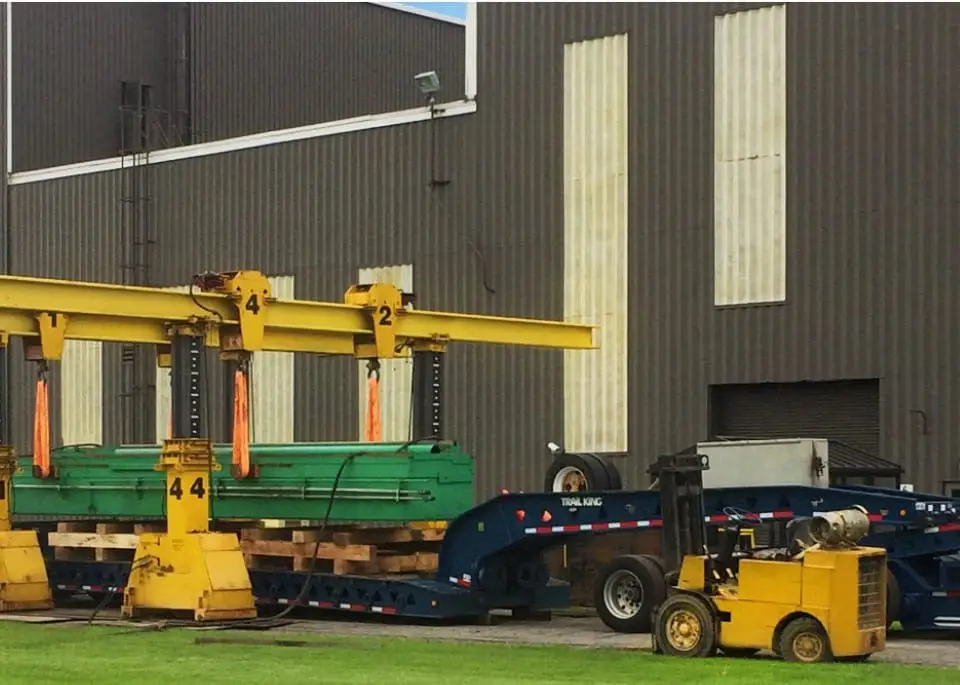
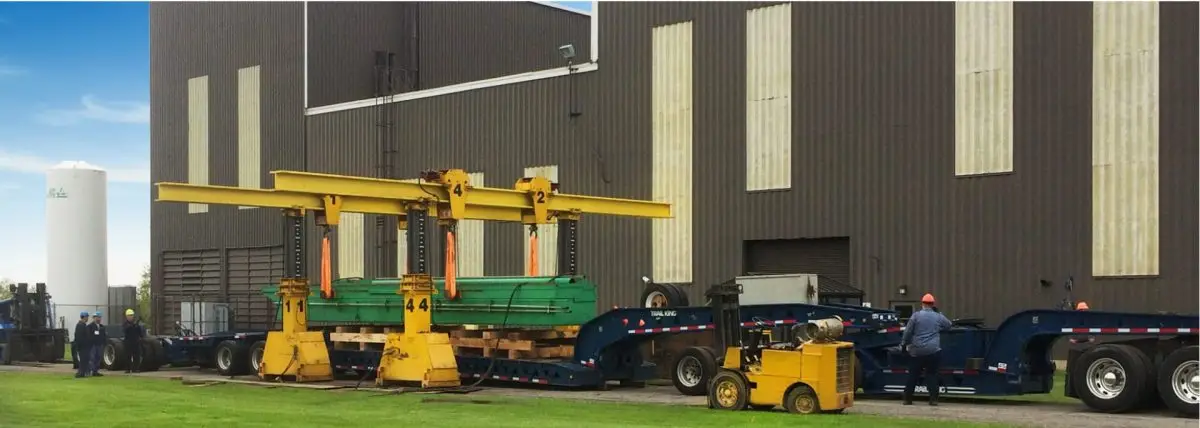
When a Regular Forklift Won’t Cut It: Why We Use Versalift Forklifts for Heavy Machinery Moves
October 22, 2025
How to maintain machinery storage facilities to prevent rust and damage
February 25, 2026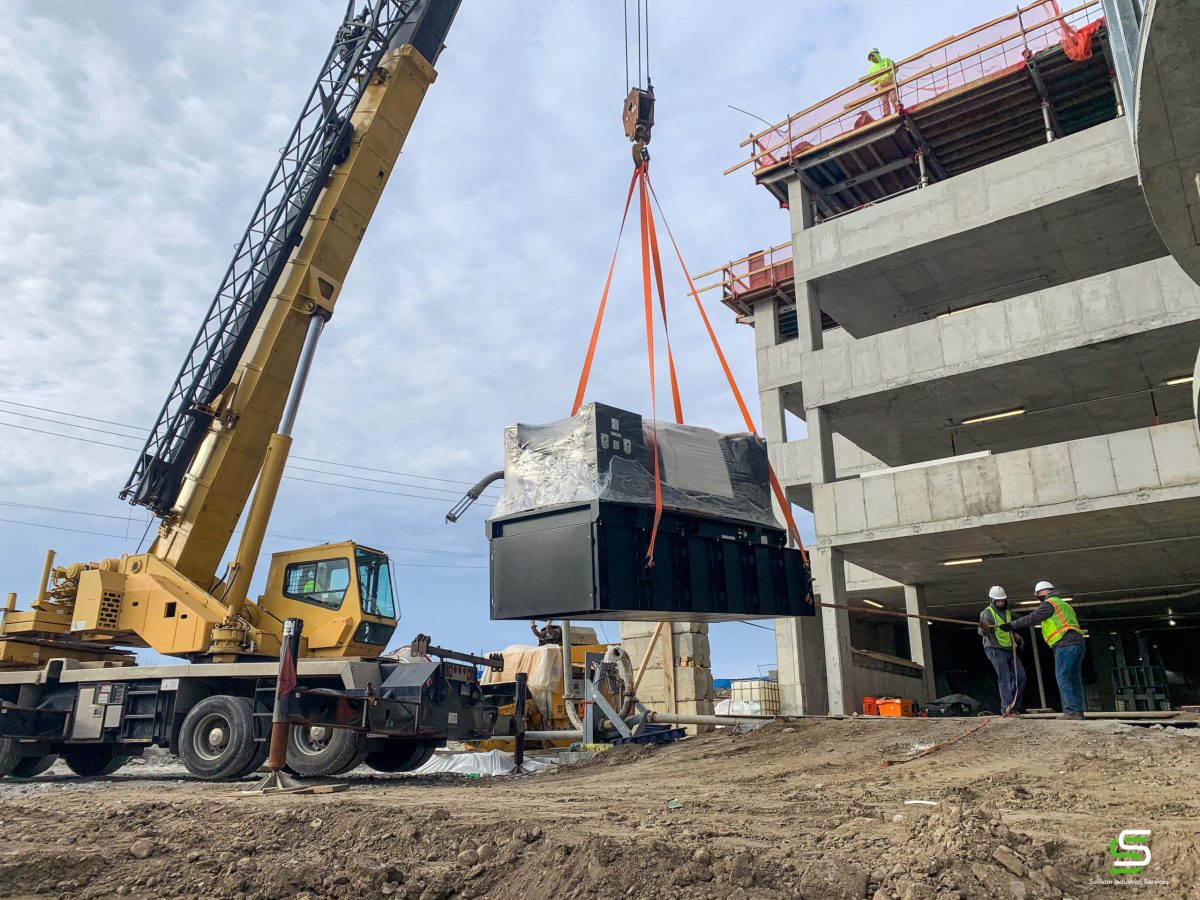
The $250,000 CNC machine crashes to the factory floor. The rigging machine that lifted it sits idle while the project manager calculates the damage: destroyed equipment, downtime costs, potential lawsuits, and a reputation in tatters. The culprit? A miscalculation in weight distribution that overloaded one side of the lifting system by 40%.
This scenario plays out more often than industry professionals want to admit. Weight distribution errors represent one of the most common yet preventable causes of equipment damage during rigging operations. Understanding how to properly size your rigging machine based on accurate load distribution isn’t just about following regulations—it’s about protecting millions of dollars in assets and, more importantly, human lives.
Why Weight Distribution Matters More Than Total Load Capacity
Most facility managers focus exclusively on whether their rigging machine can handle the total weight of a load. A 20-ton press needs a 25-ton crane, right? This oversimplified approach ignores the critical factor that destroys equipment: how that weight distributes across the rigging system.
When weight distributes unevenly across sling legs, attachment points, or lifting equipment, the forces multiply in ways that defy intuition. A 10,000-pound load with an off-center center of gravity can create 15,000 pounds of tension on a single sling leg while another leg carries only 5,000 pounds. The overloaded leg fails first, triggering a catastrophic chain reaction.
The physics behind this phenomenon relates directly to leverage and moment arms. When the center of gravity sits closer to one attachment point, that point bears a disproportionate share of the load. The farther the attachment points spread from the center of gravity, the more extreme this imbalance becomes.
The Hidden Costs of Undersized Rigging Equipment
Equipment damage from improper rigging represents just the visible portion of total costs. When a stamping press drops during relocation because of weight distribution errors, the financial impact cascades:
The destroyed equipment itself often carries a six-figure replacement cost. A modern CNC machining center can exceed $500,000, while specialized industrial presses reach into the millions. Unlike smaller tools, these machines cannot simply be repaired after a fall—the structural damage compromises their precision permanently.
Production downtime multiplies the financial damage exponentially. A facility producing automotive components at $10,000 per hour faces $240,000 in lost revenue for each day the damaged equipment remains offline. The ripple effects extend through supply chains, potentially triggering penalty clauses in contracts and damaging customer relationships built over decades.
Insurance premiums spike following rigging accidents. Some insurers refuse to renew policies after major incidents, forcing companies into high-risk pools with premiums that can double or triple. The reputational damage proves equally costly—word spreads quickly in industrial circles when a rigging company or facility experiences a catastrophic failure.
Worker injuries from rigging failures introduce additional costs that dwarf equipment replacement expenses. A single serious injury can generate millions in medical costs, legal fees, and settlements. OSHA violations following such incidents often exceed $100,000 in fines alone.
Calculating Center of Gravity: The Foundation of Proper Sizing
Accurate center of gravity calculations separate professional rigging operations from accidents waiting to happen. The center of gravity represents the point where all weight concentrates—where a load would balance if supported at that single point. For symmetrical loads like steel beams or uniform containers, finding this point proves straightforward. Asymmetric loads demand more sophisticated approaches.
The most reliable method for determining center of gravity in irregular loads involves direct measurement using load cells. Attach load cells to each proposed lifting point and partially lift the load. The weight readings from each cell reveal exactly how the load distributes. If one cell reads 8,000 pounds and another reads 2,000 pounds on a 10,000-pound load, the center of gravity sits much closer to the first lifting point.
Mathematical calculations provide an alternative when load cells aren’t available. For a load with two lifting points, multiply the weight reading at one end by its distance from that point, then divide by the total distance between lifting points. This formula reveals the center of gravity location along that axis. Repeat the process for the perpendicular axis on loads requiring three or four lifting points.
Many industrial machines have their center of gravity marked by the manufacturer, but this information becomes unreliable after modifications or when attachments are added. A press with added tooling or a machine with a removed component no longer matches the original specifications. Always verify the center of gravity before rigging operations, especially on equipment that has been in service.
The vertical position of the center of gravity matters as much as the horizontal plane. A load with a high center of gravity becomes unstable during lifting, prone to tipping or rotation. This instability places additional stress on rigging equipment and requires specialized lifting techniques to maintain control.
How Sling Angles Multiply Forces on Your Rigging Machine
The angle at which slings attach to a load dramatically affects the forces acting on your rigging machine. This phenomenon catches even experienced riggers off guard because the relationship between angle and force multiplies counterintuitively.
At a vertical 90-degree angle, each sling in a two-leg configuration carries exactly half the load weight. A 2,000-pound load requires 1,000 pounds of capacity per sling. However, as the sling angle decreases from vertical, the tension increases exponentially.
At a 60-degree angle from horizontal—considered the industry standard for most lifts—the tension factor rises to 1.155. That same 2,000-pound load now requires each sling to handle 1,155 pounds. At 45 degrees, the multiplier jumps to 1.414, creating 1,414 pounds of tension per leg. The relationship becomes dangerous at 30 degrees, where the tension factor reaches 2.0, doubling the load on each sling to 2,000 pounds.
This multiplication occurs because lower angles create greater horizontal forces that must be resisted by the slings. Imagine holding a bucket of water straight down versus holding it out to the side—the mechanical principle remains identical. The slings must support not just the vertical weight but also resist the horizontal forces trying to pull the load apart.
The practical implication for sizing rigging machines becomes clear: you cannot simply match crane capacity to load weight. You must account for the tension multipliers created by sling geometry. A 10,000-pound load lifted at 30-degree angles requires rigging equipment rated for 20,000 pounds per leg—40,000 pounds total capacity in a two-leg configuration.
Riggers should avoid sling angles below 45 degrees whenever possible. Operations requiring angles below 30 degrees demand specialized equipment and engineering analysis. The forces involved at shallow angles can overload even properly sized equipment if other factors like dynamic loading or uneven weight distribution compound the stresses.
Sizing Rigging Machines for Asymmetric Loads
Asymmetric loads represent the most challenging scenarios for rigging machine selection. These loads don’t just require adequate total capacity—they demand equipment capable of handling drastically uneven load distribution while maintaining stability and control.
Consider a 20,000-pound industrial press with an off-center motor assembly. If the center of gravity sits 2 feet from one edge and 8 feet from the other on a 10-foot-wide base, the load distribution becomes severely imbalanced. The sling closest to the center of gravity must carry 16,000 pounds while the far sling handles only 4,000 pounds. This four-to-one ratio means undersized rigging on the heavy side fails catastrophically.
Spreader bars and beams provide the solution for many asymmetric load challenges. These devices create additional attachment points and help distribute loads more evenly across the rigging system. A properly designed spreader bar can convert a dangerously imbalanced two-point lift into a stable four-point lift with manageable load distribution.
Adjustable rigging systems offer another approach for asymmetric loads. By using different sling lengths or adjustable shackles, riggers can position the crane hook directly above the center of gravity despite uneven lifting points. This adjustment ensures the load remains level during the lift and reduces stress on individual rigging components.
The key to sizing rigging machines for asymmetric loads lies in calculating the actual tension at each attachment point rather than assuming equal distribution. Use the center of gravity formulas to determine the force at each point, then multiply by the appropriate sling angle factor. The rigging machine must accommodate the highest calculated tension, not just the average.
Dynamic loads add another layer of complexity to asymmetric rigging. When a load starts to lift, acceleration forces can increase tensions by 15-25% beyond static calculations. Professional riggers include dynamic amplification factors in their capacity calculations, typically multiplying the static load by 1.15 to 1.25 for normal lifting operations.
Common Mistakes That Lead to Equipment Destruction
The following errors appear repeatedly in accident investigations and insurance claims. Recognizing these patterns helps facilities avoid joining the statistics.
Overlooking rigging equipment weight in total load calculations ranks among the most frequent mistakes. The slings, shackles, hooks, spreader bars, and other hardware below the crane hook count as part of the lifted load. On heavy lifts, this equipment can add thousands of pounds. A rigger who calculates a 25,000-pound load but forgets the 2,000 pounds of rigging equipment has effectively overloaded the system by 8%.
Failing to account for sling angle effects consistently appears in rigging failures. When riggers size equipment based solely on load weight without considering the tension multipliers from shallow sling angles, overload becomes inevitable. This mistake often occurs when space constraints force suboptimal rigging geometry without corresponding increases in equipment capacity.
Using mixed or mismatched rigging components introduces weak points that compromise the entire system. When one sling has insufficient capacity relative to others, or when shackles don’t match sling ratings, the weakest component determines system capacity. The entire rigging setup becomes only as strong as its weakest link.
Neglecting regular equipment inspections allows degraded rigging gear to remain in service. Slings develop wear, hooks show deformation, and shackles sustain damage through repeated use. This degradation reduces working load limits below the rated capacity marked on new equipment. Operating damaged rigging at full capacity ratings guarantees eventual failure.
Inadequate communication between crane operators and ground personnel creates coordination failures that stress rigging equipment beyond design limits. Sudden movements, premature lifts, or misunderstood signals can generate shock loads that multiply forces acting on the system. These dynamic events can briefly double or triple the effective load.
Proper Documentation and Pre-Lift Planning
Professional rigging operations don’t happen by chance—they result from systematic planning and documentation that accounts for every variable affecting equipment sizing and load distribution.
A comprehensive lift plan documents all critical factors: load weight, dimensions, center of gravity location, attachment point locations, sling angles, rigging equipment specifications, and crane capacity. This documentation creates a reference point that all personnel can review before operations begin. The plan also provides legal protection in the event of accidents, demonstrating that proper procedures were followed.
Pre-lift meetings bring together all stakeholders to review the plan and address concerns. The crane operator, riggers, signal person, and project supervisor should all understand their roles and the critical factors affecting the lift. These meetings often reveal overlooked details that might otherwise cause problems during execution.
Test lifts provide the final verification before committing to a full lift. The load should be raised just inches off the ground and held there while riggers verify that it remains level, the equipment handles the weight appropriately, and no unexpected issues emerge. This practice catches center of gravity errors, rigging misconfigurations, and capacity issues before they can cause serious damage.
Load calculations should be documented and signed by a qualified person. These calculations must include the actual weight, center of gravity location, sling angles, tension factors, dynamic amplification factors, and the resulting required equipment capacities. This documentation demonstrates due diligence and provides a record for future lifts of similar equipment.
Equipment inspection records must be current and accessible. Before any lift, verify that all rigging components have been inspected according to manufacturer requirements and industry standards. Damaged or questionable equipment must be removed from service immediately, regardless of schedule pressures or convenience.
When to Call Professional Rigging Services
Some situations demand expertise beyond typical facility capabilities. Recognizing when to engage professional rigging services protects both equipment and personnel from the consequences of insufficient knowledge or resources.
Lifts exceeding 20 tons typically require specialized equipment and expertise that general facilities don’t maintain in-house. Professional rigging companies possess cranes, gantries, and hydraulic systems designed for massive loads, along with operators trained specifically for these challenging applications.
Complex asymmetric loads benefit from professional engineering analysis. When center of gravity calculations become complicated or when load distribution creates concerning imbalances, professional riggers can design custom spreader systems and rigging configurations that ensure safe lifts.
Tight clearances and confined spaces introduce complications that demand specialized equipment and techniques. Professional riggers have access to low-headroom systems, specialized jacks, and transport equipment designed for navigating restricted areas without compromising safety or load capacity.
Time-sensitive relocations may justify professional services even for loads within facility capabilities. Professional crews work efficiently with specialized equipment, completing moves in hours that might take days with in-house resources. The reduced downtime often justifies the service cost.
When regulatory compliance adds complexity to rigging operations, professional services provide documented adherence to standards. Companies operating in heavily regulated industries or dealing with government contracts often find that professional rigging documentation satisfies regulatory requirements more completely than in-house operations.
Moving Forward with Confidence
Proper weight distribution calculations and rigging machine sizing transform equipment relocation from a nerve-wracking gamble into a controlled, professional operation. The principles outlined here—accurate center of gravity determination, sling angle calculations, proper equipment selection, and systematic planning—form the foundation of safe rigging practices.
The investment in proper rigging equipment and expertise pays dividends through avoided damage, reduced insurance costs, eliminated downtime, and protected reputations. When a $500,000 machine moves safely because someone took the time to calculate load distribution correctly and size the rigging machine appropriately, that represents success far more valuable than the cost of proper planning.
For facilities facing machinery relocation, plant expansions, or equipment upgrades, partnering with experienced professionals removes the risk from critical operations. Explore our machinery moving services here to learn how proper weight distribution analysis protects your equipment investments, or call us at (724) 339-8900 to discuss your specific rigging challenges and receive expert guidance on sizing the right equipment for your heavy load operations.