

Weight Distribution Errors That Destroy Equipment: Sizing Your Rigging Machine Correctly
December 24, 2025
7 Types of Crane Services Used on Construction Sites
June 22, 2026
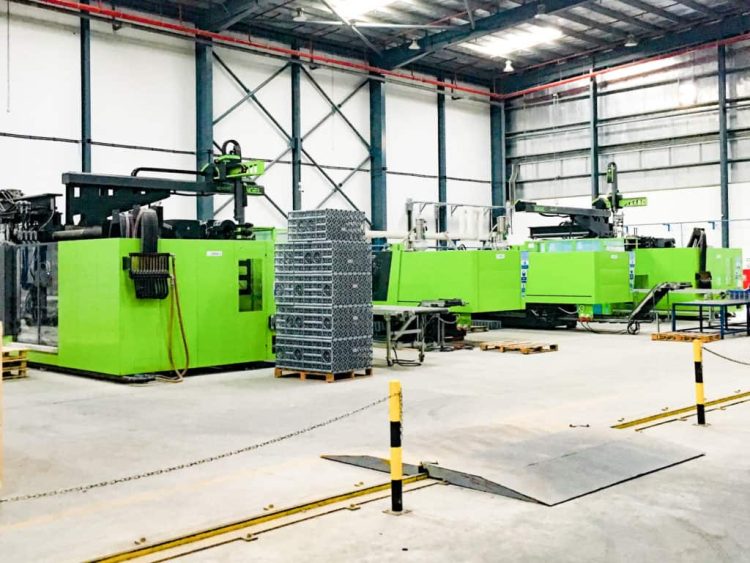
Industrial machinery is a significant capital investment. Whether you’re storing CNC machines between plant relocations, holding stamping equipment during a facility transition, or warehousing heavy assets while a new site comes online, what happens during that storage period matters more than most people realize. Rust doesn’t announce itself. It starts in hidden corners — inside spindles, along bed ways, inside hydraulic cylinders — and by the time it’s visible, the damage is already done.
The good news is that rust and storage-related damage are almost entirely preventable. But prevention requires more than sliding a machine into a warehouse and locking the door. It requires a deliberate, systematic approach to how your machinery storage facility is managed, maintained, and monitored.
This guide breaks down exactly what that looks like.
Understand What Actually Causes Rust in Storage
Before you can prevent rust, you need to understand what creates it. Rust is iron oxide — it forms when iron or steel comes into contact with oxygen and moisture simultaneously. It doesn’t need much. Even ambient humidity in an enclosed warehouse can be enough to start the process on exposed metal surfaces.
In industrial machinery storage environments, there are three main culprits:
Humidity and condensation — especially problematic when temperatures fluctuate. When warm air meets a cooler metal surface, moisture condenses directly onto the machine. This is common in facilities without proper climate control, particularly during seasonal transitions.
Residual contaminants — cutting fluids, coolant residue, oils, and even fingerprints left on metal surfaces before storage can actually accelerate corrosion rather than prevent it. Some of these substances trap moisture against the metal or introduce acidic compounds that speed up oxidation.
Stagnant air — rust thrives in still, humid environments. A machinery storage facility with poor ventilation creates pockets of damp, oxygen-rich air right where you don’t want them: around your most expensive assets.
Know these triggers, and you can build a maintenance plan that directly addresses each one.
Humidity Control Is Non-Negotiable
If there’s one single factor that separates a well-maintained machinery storage facility from one that destroys equipment, it’s humidity control. Industry standards point to keeping relative humidity below 60 percent as the baseline target. In practice, the closer you can get to 40–50 percent, the better.
This means investing in the right infrastructure:
Industrial-grade dehumidifiers — not residential units. Machinery storage spaces tend to be large and their humidity loads can be significant, especially in regions with humid summers or cold winters where condensation is a constant risk.
Adequate ventilation — stagnant air is the enemy. Good airflow doesn’t mean open doors (which invite outdoor humidity); it means a properly designed HVAC or ventilation system that keeps air moving without introducing uncontrolled moisture.
Desiccants for enclosed spaces — silica gel packs and other desiccant materials placed inside crating, control panels, or sealed compartments on machinery can absorb localized moisture that general facility dehumidifiers can’t reach. These need to be checked and replaced or recharged regularly. A saturated desiccant is worse than no desiccant at all.
Humidity monitoring — install sensors throughout the storage area, not just at one point. Large facilities can have significant humidity variation across zones, particularly near loading doors, exterior walls, or areas with poor insulation.
Prep the Machinery Before It Goes Into Storage
What you do to the equipment before it enters your industrial machinery storage facility is just as important as the facility conditions themselves. Skipping this step is one of the most common — and most costly — mistakes.
Clean It Thoroughly First
Every surface that goes into storage should be cleaned of coolant residue, cutting oils, chips, and debris. These aren’t neutral substances in a storage environment. Coolants can break down and become acidic. Metal chips trap moisture. Oils that were fine during operation can go rancid in storage and create a corrosive environment against the very surfaces they’re sitting on.
Use an appropriate industrial degreaser, ensure surfaces are fully dry after cleaning, and pay attention to hidden areas: chip trays, coolant sumps, interior channels, and any enclosed compartments.
Apply Rust Preventive Coatings
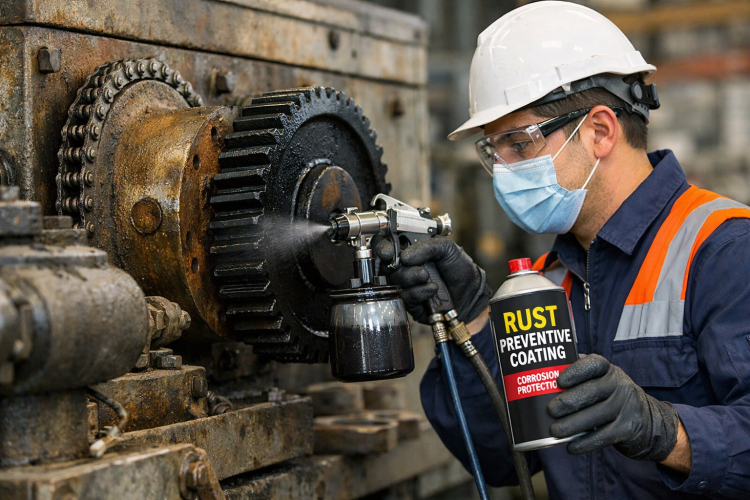
Once clean and dry, exposed metal surfaces need a protective barrier. There are a few options depending on how long the machinery will be stored:
Short-term storage (weeks to a few months) — a light rust preventive spray or oil-based film is usually sufficient. These are designed to be easily removed when the machine goes back into service.
Medium to long-term storage (several months to years) — heavier wax-based or petroleum-based coatings provide more durable protection. These form a thicker barrier that holds up against temperature fluctuations and extended humidity exposure.
Internal components — don’t just protect surfaces you can see. Spindles, hydraulic systems, and internal channels need attention too. Running preservation oil through hydraulic systems, applying corrosion inhibitor to exposed spindles, and coating slide ways and bed surfaces should all be part of the pre-storage process.
Handle It Right
Human skin is acidic. Oils from hands left on bare metal surfaces during pre-storage preparation can initiate corrosion in surprisingly short timeframes. Workers handling machinery before storage should use gloves or cloth when touching precision metal surfaces.
Maintain the Storage Facility — Not Just the Equipment
A machinery storage facility is not a passive space. The building itself needs ongoing maintenance to do its job. A facility that’s leaking, poorly sealed, or struggling with drainage problems will undo every preventive measure you’ve applied to the equipment inside it.
Roof and Wall Integrity
Inspect the building envelope regularly. Roof leaks are an obvious problem, but less obvious issues like gaps around door seals, cracks in exterior walls, and improperly sealed penetrations can allow moisture infiltration that compromises your entire storage environment. Catch these early — a minor roof repair is significantly cheaper than replacing a machine that’s been hit by water intrusion.
Flooring and Drainage
Concrete floors in industrial storage facilities are porous, and moisture can wick up from below. This is particularly problematic in older facilities or those without adequate vapor barriers beneath the slab. Watch for pooling water, efflorescence (white mineral deposits on concrete — a reliable sign of moisture movement), or staining under machinery. Floor drains should be functional and unobstructed. Standing water anywhere in the facility is a problem.
Loading Doors and Access Points
Loading dock doors and facility access points are the most common sources of uncontrolled humidity infiltration. Every time a large door opens, you’re exchanging interior air for whatever the outside conditions happen to be. If your facility is in a region with significant seasonal humidity, consider door seals, dock seals, and procedures for minimizing door-open time during high-humidity conditions.
Run Periodic Idling Cycles on Stored Equipment
This is one that a lot of people skip, and it makes a real difference. Machinery that sits completely static during long-term storage is more vulnerable to internal corrosion than equipment that’s periodically cycled. Protective oils and greases settle and migrate over time, leaving some internal surfaces partially exposed. Static components can also develop flat spots or corrosion on bearing surfaces.
For CNC machines, stamping presses, hydraulic equipment, and similar assets, establishing a periodic idling schedule — rotating spindles, cycling hydraulic systems, moving slides through their range of motion — redistributes protective films across internal surfaces, prevents moisture accumulation on static metal components, and maintains mechanical condition so the machine comes back into service faster.
How often depends on the equipment and storage duration. Monthly cycling is a reasonable baseline for most heavy machinery in long-term storage. Your machinery storage provider or equipment manufacturer can advise on specific requirements for particular machine types.
Establish a Formal Inspection Schedule
Prevention is only as effective as your ability to catch problems early. In industrial machinery storage, that means building a formal, documented inspection routine — not an informal walk-through whenever someone happens to be in the building.
A solid inspection protocol covers:
Visual inspection of all stored equipment for early signs of rust — surface discoloration, pitting, or reddish-brown staining. Catching surface rust before it progresses to pitting corrosion is the difference between a quick clean-and-recoat and a machined surface that needs rework or replacement.
Checking desiccants and recharging or replacing them on schedule. A saturated desiccant is contributing nothing to moisture control.
Reviewing rust preventive coatings — particularly on equipment that has been in storage for more than a few months. Coatings thin out and degrade over time, especially in environments with temperature variation. Reapplication may be needed.
Reviewing humidity logs from sensors throughout the facility. Trend data is more useful than point-in-time readings — a gradual upward trend in humidity over several weeks tells you something is changing before it becomes a crisis.
Inspecting the building itself — roof, walls, drainage, door seals. Quarterly building inspections alongside equipment checks are a minimum standard for any facility storing high-value machinery.
Document everything. A written inspection log creates accountability, helps identify patterns, and provides valuable records if equipment condition ever becomes a point of dispute.
Cover and Segregate Equipment Properly
How equipment is arranged and covered inside your machinery storage facility affects both rust prevention and physical damage risk.
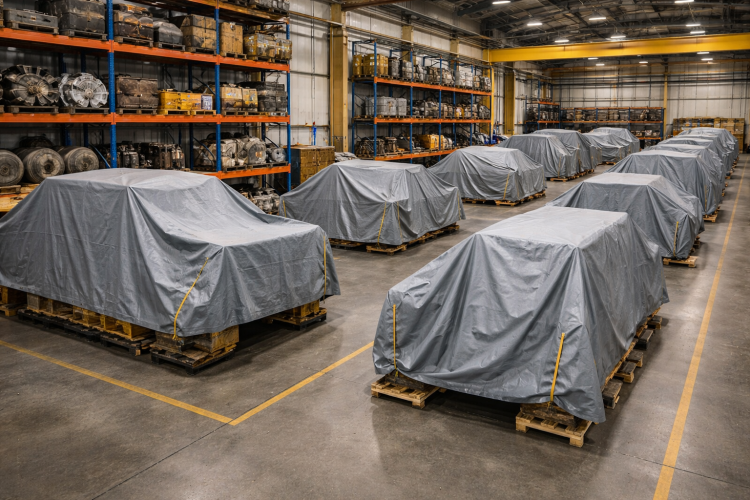
Covering machinery provides an additional barrier against dust and airborne moisture — but the material matters. Impermeable plastic sheeting can trap condensation against the machine surface rather than letting it dissipate, which is the opposite of what you want. Breathable covers that block dust and debris are generally the better choice for enclosed, humidity-controlled storage environments. In environments where humidity control is less reliable, VCI (Volatile Corrosion Inhibitor) film is worth considering — it releases a vapor-phase inhibitor that actively coats metal surfaces inside the enclosure rather than just acting as a passive barrier.
Spacing matters too. Machines packed tightly together restrict airflow around individual pieces of equipment, creating microclimates where humidity can concentrate. Leave enough clearance between stored assets to allow air circulation. Keep equipment off the floor on appropriate stands or pallets where possible — direct floor contact creates conditions for moisture wicking and makes it harder to inspect underneath.
Choose the Right Storage Partner
All of this is predicated on one thing: having access to a machinery storage facility that’s actually built and operated for industrial equipment. Not every warehouse qualifies.
When evaluating industrial machinery storage options, the questions worth asking include:
- Does the facility have active humidity and climate control, or is it just a dry building?
- What is the pre-storage preparation protocol? Do they clean and apply rust preventives before accepting equipment, or is that left to the owner?
- Is there a documented inspection schedule? Who’s responsible for it, and how are findings communicated?
- Can they handle periodic idling cycles on stored equipment, or is the machinery simply parked and left?
- What is their track record with the types of equipment you’re storing? Experience with CNC equipment, hydraulic presses, or stamping machinery is not the same as experience storing general industrial goods.
The right storage partner approaches your equipment the same way you do — as a valuable asset that needs to come out of storage in the same condition it went in.
The Bottom Line on Machinery Storage Maintenance
Rust and storage damage don’t happen because of bad luck. They happen because of gaps in preparation, facility conditions, and ongoing oversight. The operations that consistently get equipment in and out of storage without corrosion or damage share a common approach: they treat storage as an active process, not a passive one.
That means controlling the environment, preparing the equipment properly before it ever enters storage, maintaining the building as rigorously as the machinery inside it, and keeping a formal inspection record that creates accountability and catches problems before they become expensive.
Whether you’re storing a single machine through a short facility transition or warehousing an entire production line for an extended period, these principles don’t change. The scale does — but the approach doesn’t.
If you need a storage solution you can actually trust, explore our Industrial Machinery Storage services — purpose-built for heavy industrial equipment, from CNC machines to stamping presses and everything in between. Or call us directly at (724) 339-8900 to talk through your specific storage needs with a team that’s been handling industrial machinery for over 40 years.

