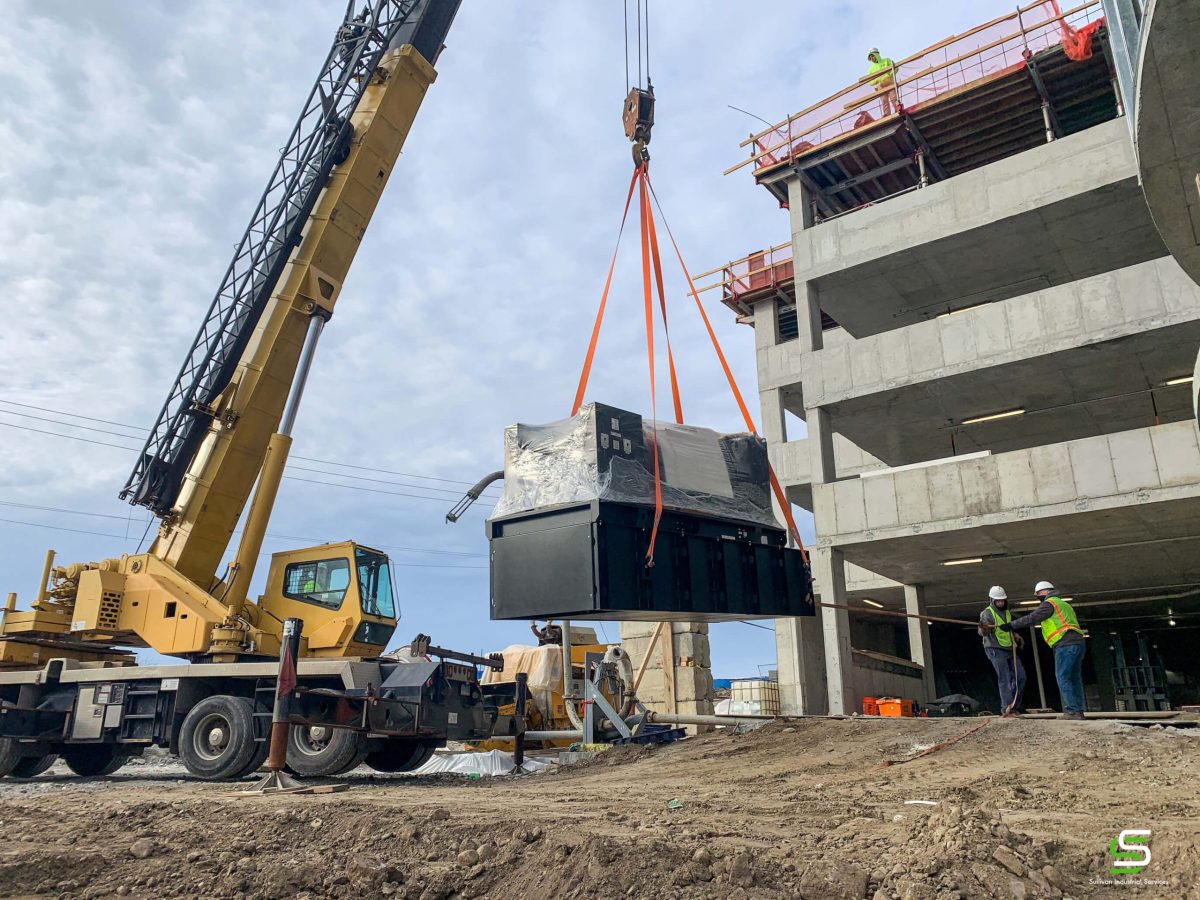
7 Types of Crane Services Used on Construction Sites
June 22, 2026Every hour a production line sits idle costs money, and an equipment moving project is one of the few things that can stop a line on purpose. Most of the damage doesn’t come from the move itself. It comes from the gaps around it: a machine that arrives before the floor is ready, a lift that needed a bigger crane than anyone ordered, or utilities that weren’t labeled before disconnect.
Good planning shrinks those gaps. This guide walks through how to plan an equipment moving project in seven steps, what to settle before the crew arrives, and what to ask when you evaluate a rigging company. It applies whether you’re shifting one press across the shop floor or relocating an entire facility.
Why Equipment Moving Projects Run Over Schedule
Delays usually trace back to a few predictable causes.
- The scope was vague. “Move the machines” can mean disconnecting, rigging, loading, hauling, setting, leveling and reconnecting. If nobody defined where the project starts and stops, someone assumes the work belongs to someone else.
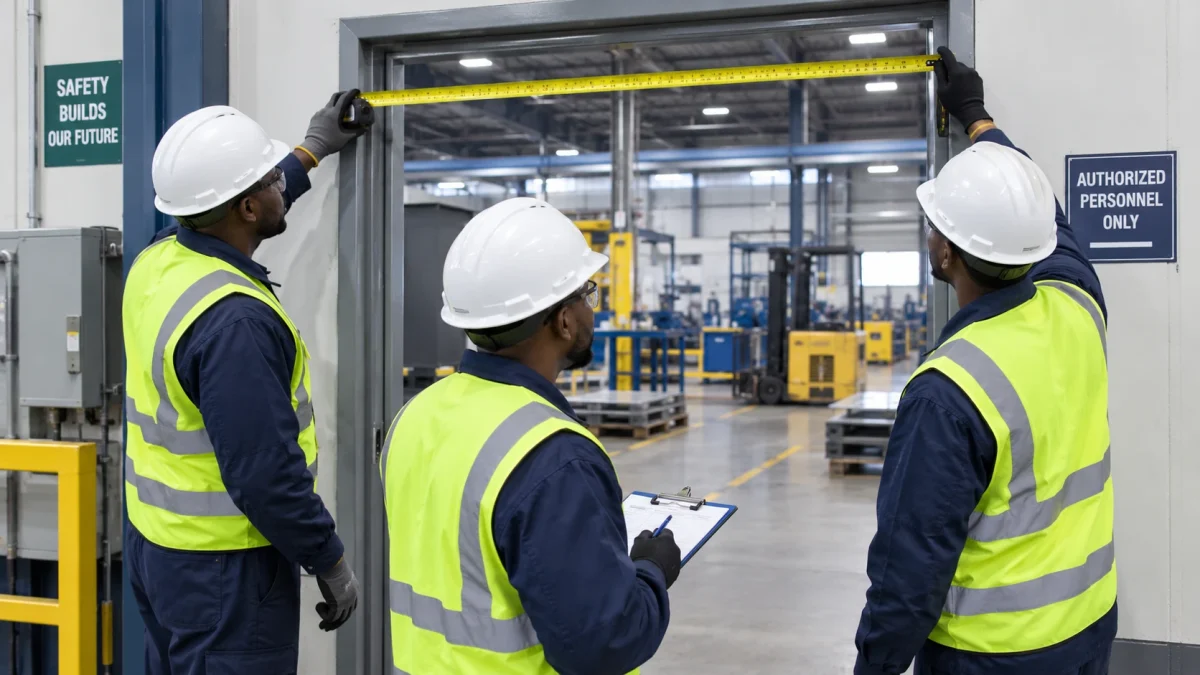
- The site wasn’t surveyed. Door heights, floor loads, overhead obstructions and turning radii only become problems on moving day if nobody measured them first.
- The schedule ignored production. Moves planned around the mover’s calendar, rather than the plant’s order book, create downtime that could have been avoided.
- Reinstallation was an afterthought. Getting equipment out is half the job. Getting it level, aligned, powered and running is the half that decides how long you’re down.
Each of these is fixable on paper before anything is lifted.
Step 1: Define Exactly What Is Moving and Why
Start with a written equipment list. For each item, record the dimensions, approximate weight, manufacturer and model, and whether it’s bolted down, anchored, or connected to utilities. Weights on nameplates can be wrong or missing, so confirm them. Heavy or awkward items drive nearly every other decision in the plan, from the crane size to the trailer type.
Also be clear about the reason for the move, because it changes the plan. A move to a new building has a fixed deadline. A layout change inside the same plant can often happen in stages. A sale or consolidation may involve equipment that never goes into production again and only needs safe removal and transport.
Decide which items are critical to revenue and which can wait. That ranking becomes the backbone of your sequence in Step 5.
Step 2: Survey Both Sites Before Anything Is Disconnected
A walkthrough of the origin and the destination, ideally with the rigging company present, will surface most surprises. Check these items:
- Door openings, aisle widths and ceiling heights along the entire path, not only at the machine
- Floor load capacity, especially where heavy equipment will be skated, jacked or set
- Overhead obstructions such as sprinklers, ductwork, cranes and cable trays
- Outdoor access: slopes, soft ground, tight corners, overhead lines and truck staging space
- Power, air, water and other utility locations at the destination, so equipment lands where it can actually be connected
- Foundations, pits or anchor points the new location requires
Take photos and measurements, and keep them with the project file. If the destination isn’t ready (flooring still curing, electrical not finished), that is much better to learn now than when a loaded truck is waiting.
Step 3: Build the Rigging and Lift Plan
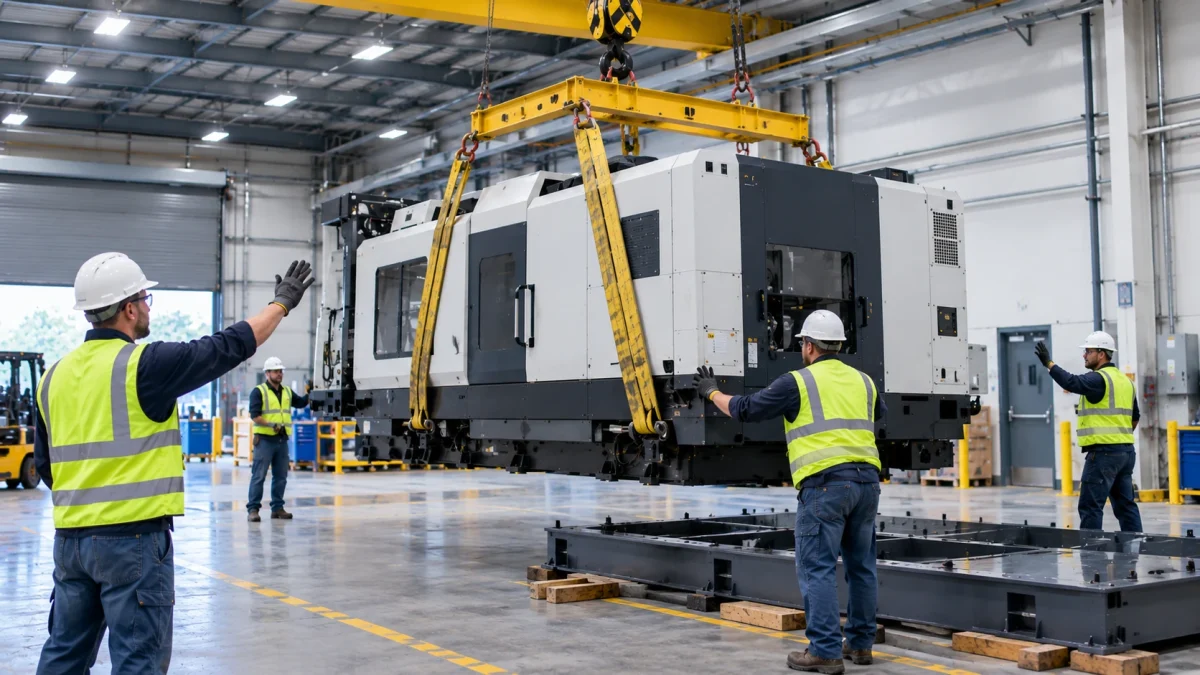
This is where equipment moving becomes rigging. The rigging plan states how each machine will be lifted, supported, moved and set, and it should name the equipment and procedures involved. A solid plan usually covers:
- The method for each item: forklift, machinery skates, jacking, gantry, or crane
- Rigging hardware sized to the actual load and center of gravity
- Crane type, capacity and placement for any item that needs a lift, along with ground and clearance requirements
- Where the load path crosses people, other equipment or live areas, and how that area will be controlled
- Who is directing each lift
For complex or critical lifts, an independent review helps. Lift consulting exists for exactly this: checking the engineering and approach on a difficult lift before the day it happens. If your project needs hoisting, the crane rental and forklift service options should be matched to the plan, not chosen last-minute because they happen to be available. Overbuying costs money, and underbuying stops the job.
Step 4: Choose the Right Transport and Protect the Equipment
Once the equipment is out, it has to travel. The right transport depends on size, weight and fragility.
Standard flatbeds work for many machines. Oversized or very heavy equipment may need heavy hauling with the right trailer, permits and route planning. Unusual loads, such as tall, wide or delicate items, are better suited to specialized hauling.
Protection matters just as much as the truck. Precision equipment, electronics and anything with exposed machined surfaces can be damaged by vibration, weather or a poorly secured load. Crating services give equipment a custom-built protective shell for transport and storage. That is cheap insurance compared with replacing a damaged spindle or recalibrating a machine.
Ask about the logistics too. Who handles permits? Who tracks delivery windows? Who is responsible if a load is delayed? Settle these questions in writing.
Step 5: Sequence the Move Around Production
This is the step that most directly controls downtime, and it’s also the step most often skipped. Instead of asking when the mover is available, ask when your plant can afford to be without each machine.
A few approaches help:
- Move in phases. Relocate non-critical equipment first, and keep revenue-generating machines running as long as possible.
- Use weekends and shutdowns. Scheduling the heaviest work around planned downtime, holidays or low-demand periods can cut the cost of lost production.
- Build the order of operations around utilities. Electrical, compressed air and other connections often set the pace of restart, so plan those crews alongside the riggers.
- Label everything. Tag cables, hoses, fasteners and components during disassembly so reassembly doesn’t turn into a puzzle.
Build a day-by-day schedule that names who does what, with a realistic buffer. Moves rarely fail because a single task is slow. They fail because tasks depend on each other and one late handoff cascades.
Step 6: Plan for Storage Gaps
Sometimes the old site is empty before the new one is ready. Sometimes equipment has to be removed first for a renovation. In both cases, you need somewhere safe for machines to sit.
Industrial machinery storage keeps equipment protected until you’re ready for it. Decide in advance how long the equipment may be stored, whether it needs climate protection, and how it will be retrieved. Combining storage with crating and transport under one provider keeps responsibility clear and cuts the handoffs where equipment gets damaged or delayed.
Step 7: Reinstall, Level, Test and Document
A move isn’t finished when the machine is on the floor. Reinstallation includes setting the equipment, anchoring and leveling it, reconnecting utilities, and confirming it runs correctly. Many precision machines need alignment and calibration before they’re production-ready, and that work often involves the equipment manufacturer or your own maintenance team.
Plan this phase as carefully as the removal. Agree up front on what “done” means: powered up, tested, and signed off by your team. Keep photos and records from the project. They’re useful for insurance, for future moves and for troubleshooting if something behaves differently after the move.
Single Machine Move or Full Plant Relocation?
The seven steps apply to both, but the scale changes the approach.
A single machine move or a small layout change is mostly about precision. You need accurate measurements, the right rigging method and a tight window, and one well-run crew can often handle it. See the machinery moving service for that kind of work.
A full facility move adds a layer of project management. You’re coordinating dozens of machines, multiple trucks, utility contractors, storage and a staged restart, and that is where a turnkey plant relocation approach pays off. One team handles planning, removal, transport, setting and reinstallation, so there’s a single point of accountability instead of five contractors pointing at each other.
If you’re unsure which category your project falls into, an honest conversation with a rigging company at the start will usually tell you. A good one will tell you when a project is simpler than you expected, not only when it’s more complicated.
Questions to Ask Before You Hire a Rigging Company
The company you choose affects the outcome more than any single piece of equipment. These questions separate prepared companies from hopeful ones:
- Do you survey the site before quoting? A quote based on a phone call is a guess.
- Who does the critical work? Ask whether the lifting and rigging are done by the company’s own crew or subcontracted.
- What does your crew’s safety training look like? Look for specifics, not generalities.
- What equipment do you own? Access to cranes, forklifts and hauling equipment in-house means fewer scheduling dependencies.
- What is included in the price? Clarify disconnecting, transport, permits, crating, setting, leveling and reconnection so nothing is assumed.
- How do you handle surprises? Every move has them. You want a plan for change orders and delays before they happen.
- Can you show experience in my industry? Tool and die, stamping, aerospace, automotive, food and beverage, medical and plastics all have different handling needs.
What Drives the Cost of an Equipment Moving Project
Pricing varies widely, so be wary of anyone who gives you a number without seeing the job. The main factors are the weight and size of the equipment, the complexity of the lift, the distance, the access at both ends, the amount of disassembly and reassembly required, whether crating or storage is needed, and how tight the timeline is.
The cheapest quote is not always the lowest cost. A move that damages a machine or runs two days over can cost far more than the difference between bids. Compare scope, not only totals, and weigh the cost of downtime alongside the cost of the move.
Plan the Move Before You Need It
The most useful thing you can do is start early. Equipment moving goes smoothly when the survey, the lift plan, the transport and the restart schedule are all agreed on before the first bolt comes loose. It goes badly when decisions are made on moving day.
If you have equipment to move in Pennsylvania, West Virginia or anywhere in the country, J.V. Rigging can help you plan it. Based in Leechburg, PA and serving industrial clients since 1981, the team handles everything from a single machine to a complete turnkey factory move. Call (724) 339-8900 or request a quote to talk through your project before your next production window closes.